
What is Oaxaca Known For? (10 Things that Define Oaxaca Mexico)



Curious about Oaxaca, Mexico?
You’re in the right place because this article will shine a light on all the things that are quintessentially Oaxaca. If you want to know What is Oaxaca Known for? — you’re about to find out.
There are 10 things that make Oaxaca special that we’ll be talking about here. These encompass everything from food to festivals, to art and history. Ready to discover all things Oaxaca? Let’s dive in!
What is Oaxaca Known for?
1. Traditional Oaxacan Food

Traditional Oaxaca foods are unique and incredibly regional, and Oaxaca City is often called the Foodie Capital of Mexico. In fact, UNESCO declared all traditional Mexican food an Intangible Cultural Heritage of Mankind in 2010.
Some of the best chefs in Mexico, like Alejandro Ruiz Olmedo of Casa Oaxaca, Enrique Olvera of Criollo Oaxaca, and Cecila Flórian from Las Quince Letras, have Oaxacan restaurants.
Oaxaca also has an exciting street food culture, as seen on Netflix’s Street Food: Latin America (Season 1, Episode 3, “Oaxaca, Mexico”). In it, you’ll see the Oaxacan tlayuda, and more.
Here are five of the must-try Oaxaca foods and drinks, starting with the best-known Oaxaca foods, the seven moles:
🥣 Oaxaca Mole

What is mole from Oaxaca?
Oaxaca mole is unique because it’s a thick marinade paste, and also a sauce, a sauce and a full meal.
Mole is commonly served with rice and chicken or turkey, or used as a sauce, as with enmoladas. This is a Oaxacan take on enchiladas, which are usually topped with salsa, though mole is used in Oaxaca.
Mole recipes vary, but in general, they consist of these flavors and ingredients: spicy chiles, acidic red or green tomatoes, sweet fruits and chocolate, local spices, and thickeners like nuts, seeds and even tortillas.
The ingredients are crushed and worked into a paste, then mixed with water or stock, and slow-simmered for hours, or even days, until thick. It is often served on a plate with rice and a protein like pork, turkey or chicken.
There are seven types of mole from Oaxaca, including mole negro (black mole), mole colorado (red mole), mole verde (green mole), and mole amarillo (yellow mole).
You’ll find mole in restaurants all over Oaxaca City and Oaxaca state. In fact, you’ll find it all over Mexico, as mole is the National Dish of Mexico, so be on the lookout in these best Mexico City restaurants, and beyond.
🍽️ Oaxaca tlayudas
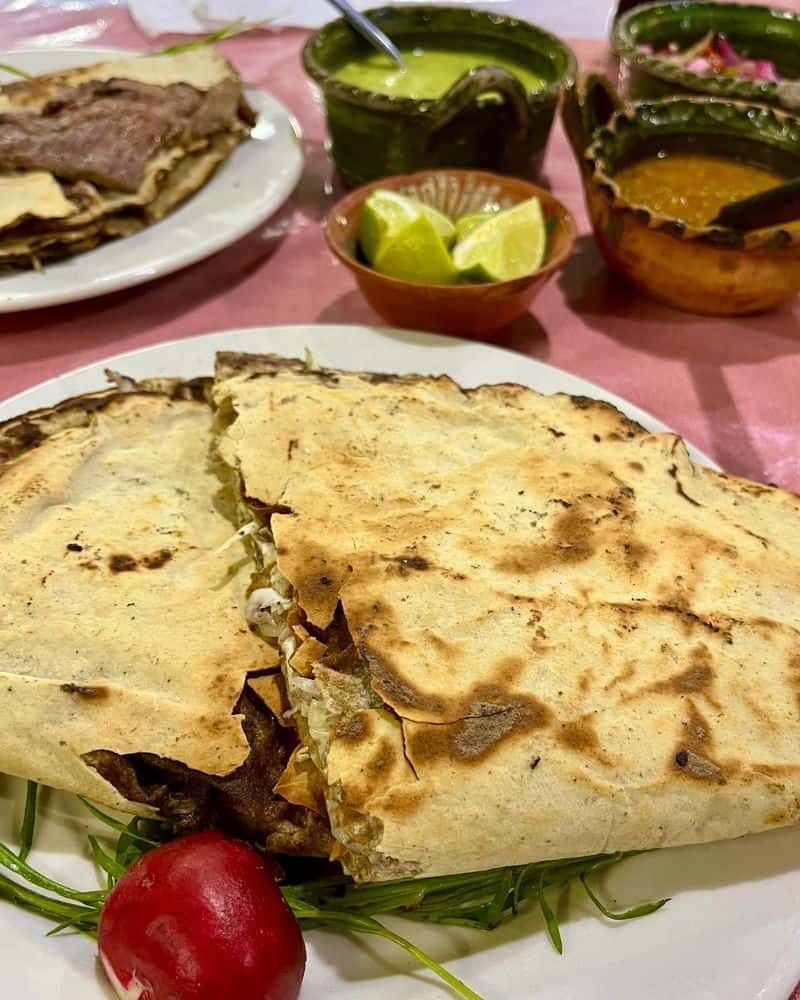
When it comes to the question — What is Oaxaca famous for? It’s the food, but there’s more to Oaxaca food than just mole. Tlayudas (pronounced tuh-lie-you-das) are the most beloved of all Oaxaca street food.
What is a tlayuda?
They’re often referred to as a Mexican pizza, because they do look like a pizza — though there’s no similarities in flavor to Italian pizza.
To make a tlayuda, you start out with a gigantic tortilla; larger than what you’d use for a burrito. The tortilla is smeared with asiento (unrefined pork lard), and placed to toast over charcoal or a traditional cooking comal.
This large, flat cooking surface is used for many Oaxaca street food dishes.
After toasting the tortilla on the comal for a few minutes, refried beans, tomatoes, onions, shredded lettuce or green cabbage and avocado are placed on top, along with quesillo.
This is the famous Oaxacan string cheese, beloved throughout Mexico and beyond. It is a fresh cheese made by hand and then rolled into a ball.
After cooking for another few minutes, the tlayuda is folded into fourths, and the Oaxaca cheese continues to melt. (Note: To really get the technique down, consider one of these best Oaxaca cooking classes.)
For those who want to add meat, it is usually just placed on top of the folded tlayuda. Most tlayuda shops offer tasajo, a dried jerky-style steak, and chorizo (sausage).
For the best tlayudas in Oaxaca, head to the local markets.
🫔 Tamales Oaxaqueños (Oaxacan Tamales)
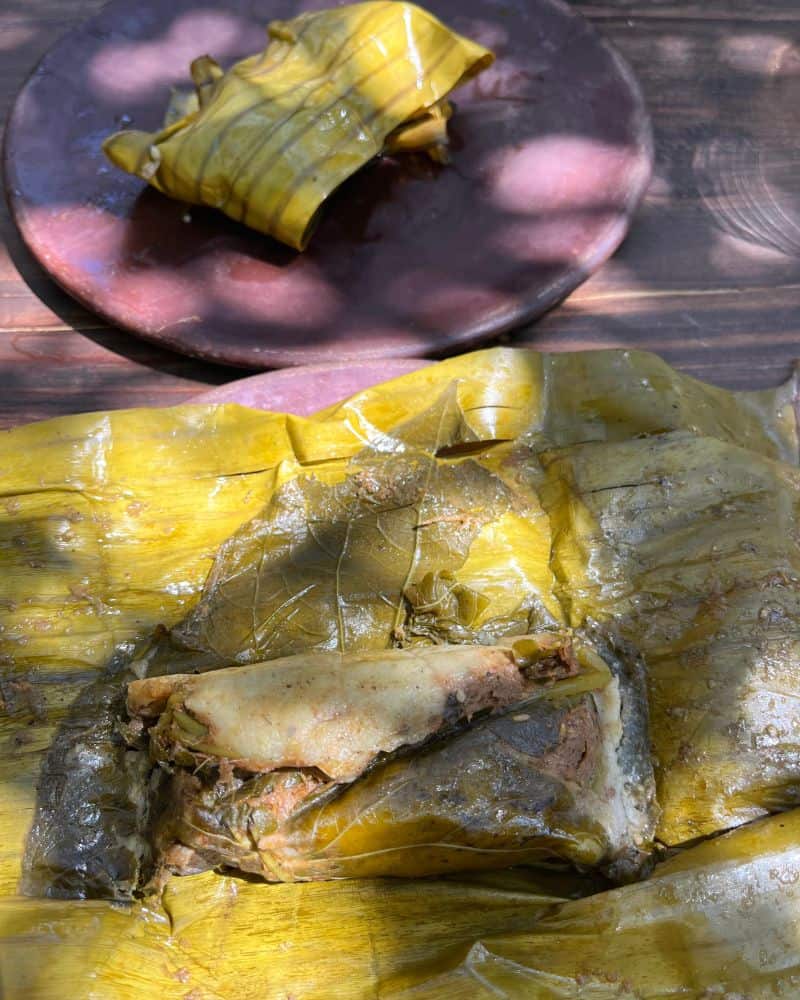
Tamales are eaten almost everywhere in Mexico, though tamales oaxaqueños (Oaxacan tamales) are made a bit different.
In Mexico, a tamal consists of a masa (corn) mixture, which is often covered in a salsa or sauce, and steamed to cook. This part is the same in Oaxaca.
After preparing the masa, Oaxacan chefs place the mixture in a plantain (banana) leaf, unlike the more commonly-used corn husk.
Throughout Oaxaca, you’ll often see tamales called tamales hojas (leaf tamales), as “hoja” is the Spanish word for leaf.
🍽️ Memelas (Memelitas)
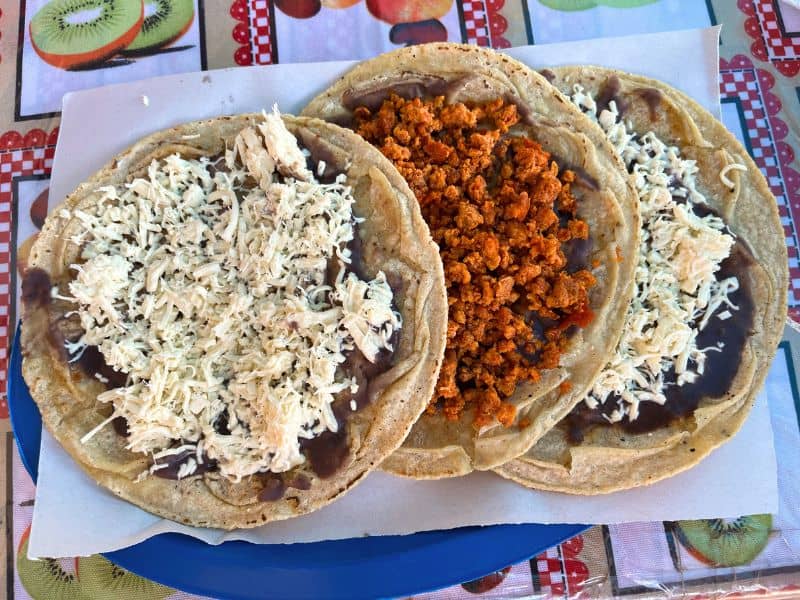
Memelas (pronounced mem-ell-uhs) are the most beloved Oaxaca antojitos. The word antojitos means “little snacks,” or appetizers. You might also see or hear them called memelitas (little memelas).
Commonly eaten earlier in the day for breakfast and lunch, memelas are basically open face tacos, though they use a thicker tortilla, similar to that of a sope.
They are made on a cooking comal, and topped with all ingredients including Oaxaca cheese, refried beans, your choice of meat and salsa.
Memelas are the perfect grab and go snack, but locals also head to the Oaxaca mercados (markets) to eat them.
🤤 Memelas Doña Vale

You can try memelas in markets all over the city, but there’s one place more popular than the rest — Memelas Doña Vale. In fact, some say it’s among the best places for memelas in Oaxaca, if not the best.
Memelas Doña Vale in Mercado Central de Abastos is a must-try on any Oaxaca City foodie tour. It was even featured on Netflix’s Street Food: Latin America show.
The chef and owner, Doña Vale (Ms. Vale), is known for her memelas and also her unique salsa morita. This delicious, hand-made salsa uses chile morita, a smoked jalapeño pepper that’s similar in taste to a smoky chipotle.
🧉 Oaxacan Tejate
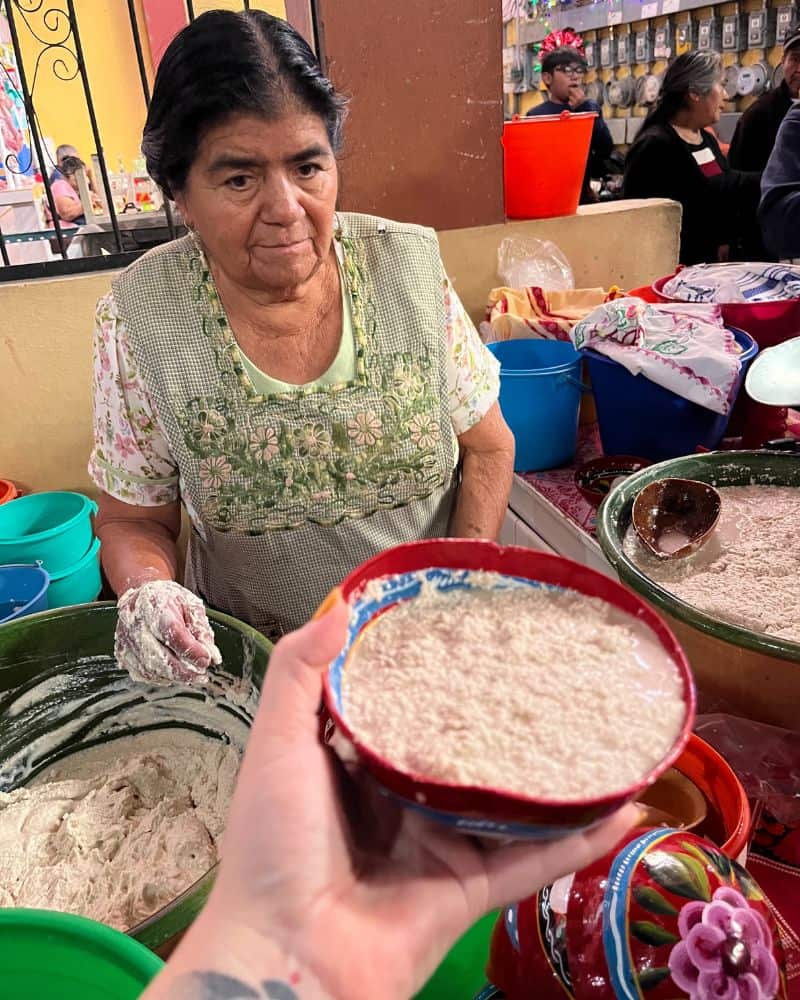
Tejate (pronounced tay-ha-tay) is a centuries-old chocolate and corn drink. While that flavor combo may not sound appetizing, this ancient drink has stood the taste test of time.
In fact, Oaxacans love tejate so much, they often call it the bebida de los dioses (drink of the gods).
Tejate is made by hand in large clay bowls, by liquifying a mixture of fermented cacao (chocolate) beans, toasted maize (corn), toasted pits of mamey (tropical fruit), and flor de cacao (cacao flower).
It is served cold, and very refreshing on a hot Oaxaca day.
Since it has been around since prehispanic times, each region, city and family will have their own unique tejate recipe. However, even with variations, tejate generally tastes like a more complex chocolate almond milk.
What is Oaxaca Known for?
2. Day of the Dead in Oaxaca

💀🌺💀 For a complete guide to attending the celebration, head to Day of the Dead in Oaxaca: Everything You Need to Know to learn more.
You can’t make a list of things Oaxaca is known for and not have Dia de los Muertos (Day of the Dead) near the top of the list. In fact, Oaxaca is one of the best places to celebrate Day of the Dead in Mexico.
It is not only one of the biggest festivals in Oaxaca, but one of the biggest, most lively, fun and best festivals in Mexico — and most important holidays in Mexico.
📆 When is Day of the Dead in Oaxaca?
Wondering, What day is Day of the Dead in Mexico? Though it’s called “Day” of the Dead, the holiday takes place over two days, November 1-2. It has the same dates each year.
💀 What is Day of the Dead?
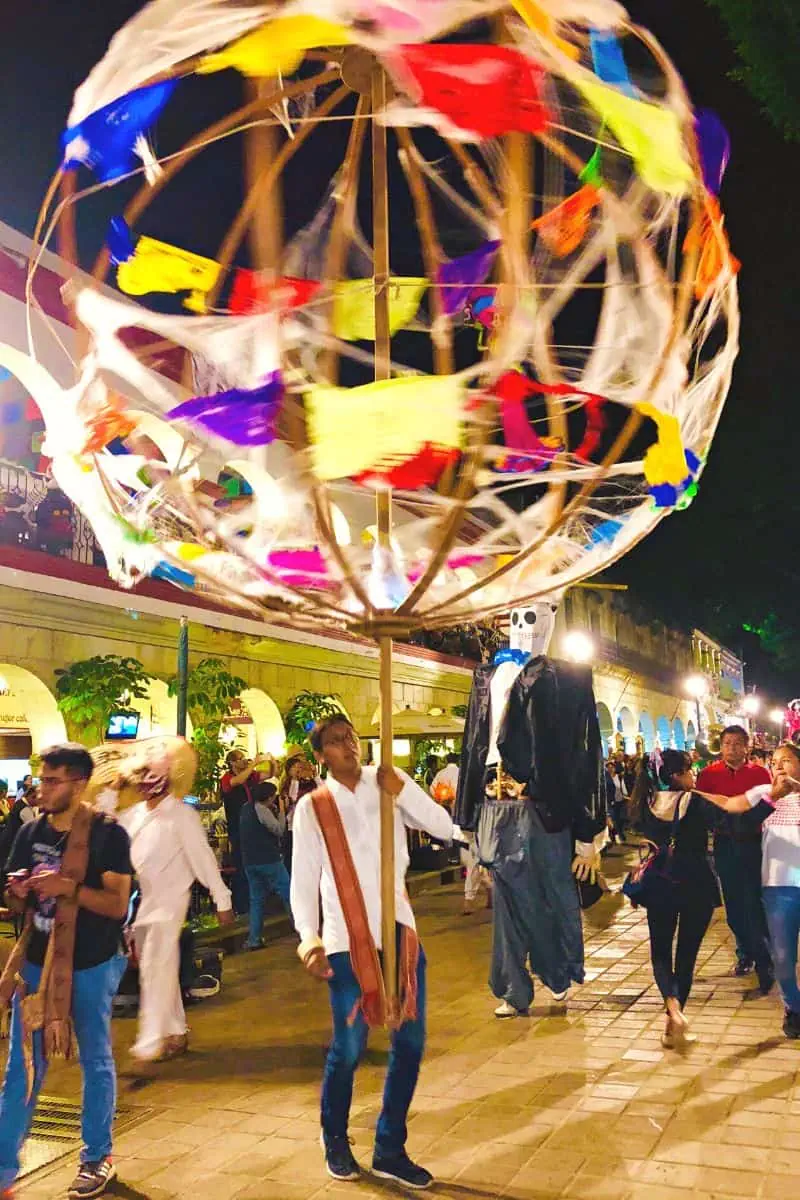
Wondering, What is Dia de Muertos? The first thing you need to know about Day of the Dead — it is not Mexican Halloween.
Day of the Dead is, however, one of the most important holiday celebrations in Oaxaca, and one of the best Mexican holidays. It is similar to the Hanal Pixan holiday, sometimes called Mayan Day of the Dead.
Unlike many present-day rituals around death, Day of the Dead is not a somber funerary event. On the contrary, Oaxaca Dia de Muertos is a celebration, one so grand even the deceased return to attend the party held in their honor.
💀 How to Attend Day of the Dead in Oaxaca

Besides the Day of the Dead dates, which are November 1st and 2nd, there are two key things to keep in mind for Day of the Dead Oaxaca travel planning:
1. Book Oaxaca accommodations asAP
Oaxaca City is a smaller town, and all Oaxaca hotels, Oaxaca VRBOs, Oaxaca Airbnbs, and Oaxaca hostels will sell out.
If you have particular needs when it comes to where you stay (ie. no stairs, full kitchen), book early so you find a place that checks all of those boxes.
Check out these articles to help you pick the best Oaxaca hotels for Day of the Dead:
2. Book Day of the Dead tours asAP
If you’re looking to do a Day of the Dead tour in Oaxaca, you’ll want to book these well in advance, and as early as possible.
Most tours are kept small at just 5-10 people, and thousands attend this Oaxaca festival, so tours sell out as well.
What is Oaxaca Known for?
3. Festivals in Oaxaca
Although Day of the Dead is the most famous Oaxaca festival, there are others. In fact, it can feel like there’s a festival every week in Oaxaca! It’s a very lively place. Here are a few more Oaxaca festivals to know about:
🪅 Oaxaca Guelaguetza Festival
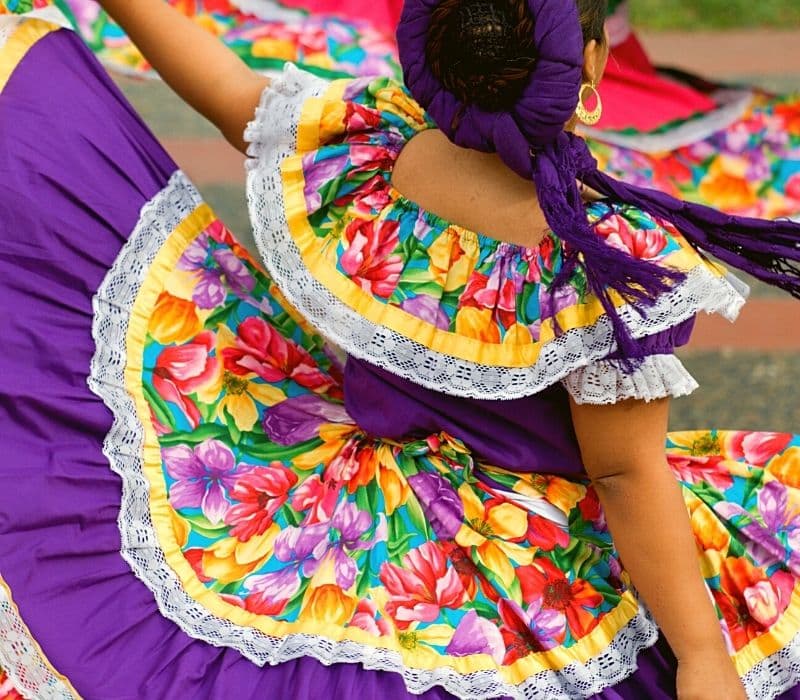
The Guelaguetza (pronounced geh-la-get-zah) is Oaxaca’s most famous folk festival. In fact, it has been called the largest folkloric festival on the Americas continent.
The Guelaguetza festival brings together people from all regions of Oaxaca to share their food, textiles and culture through dances, presentations and gift exchanges.
In fact, Guelaguetza comes from the Zapotec word, guendalezaa, meaning an offering or a gift.
📆 When is the Guelaguetza Oaxaca?
This annual event takes place on two Mondays in mid- to late-July; its dates vary from year to year.
The Guelaguetza Festival in Oaxaca is also called Los Lunes del Cerro, meaning the Mondays on the Hill. It takes place at the Oaxaca Guelaguetza Amphitheater, which is located on a hill overlooking Oaxaca City.
The dates change each year, but since 1969, the festival has been celebrated the first two Mondays immediately following July 16th.
When a Monday falls on July 18th, the day Mexican President Bento Juarez died, the festival dates are altered. He is one of the most famous people from Oaxaca, along with others like Porfirio Díaz, Lila Downs and Maria Sabina.
🌱 Noche de Rábanos (Oaxaca Radish Festival)

Looking for unusual things to do in Oaxaca City? Look no further than the annual Night of the Radishes. On December 23rd each year, Oaxaca City hosts the world’s largest radish carving festival. Yes, this is a real thing!
This is actually a pretty big deal in Oaxaca, and there’s a lot of planning and prep that goes into this short event.
The artists and families carve their radishes the morning of the festival, but the event lasts just a few hours because the radishes turn brown pretty quickly.
✝️ Semana Santa (Holy Week)

Semana Santa, also Holy Week or Easter Week, is a big deal in Mexico. This is the week leading up to Easter, and in a country that’s 80% Catholic, this weeklong holiday is an interesting time to visit Mexico
There are big celebrations throughout the country, especially in Taxco Mexico, which has an elaborate festival. The Oaxaca Semana Santa festival has parades and church processions that go through Downtown Oaxaca City.
Some can be graphic, depicting the death and resurrection of Jesus, while some, like the Procession of Silence, are meditative walks meant for contemplation.
What is Oaxaca Known for?
4. Beaches in Oaxaca

Want to check out the beautiful beaches in Oaxaca? You’re in luck — as there are plenty of good options for amazing Oaxaca beaches to explore.
Determining the best beaches Oaxaca has to offer is subjective to your needs and wants, but with so many options, there’s a perfect Oaxaca beach for everyone.
From the best surfing beaches in Oaxaca to the best swimming beaches in Oaxaca, the best beach to do the Oaxaca baby turtles release, to the only legal Mexico nude beach — it’s all on the Oaxaca Mexico Coast.
Here are five of the best beaches in Oaxaca that you won’t want to miss when you visit the Oaxacan Coast:
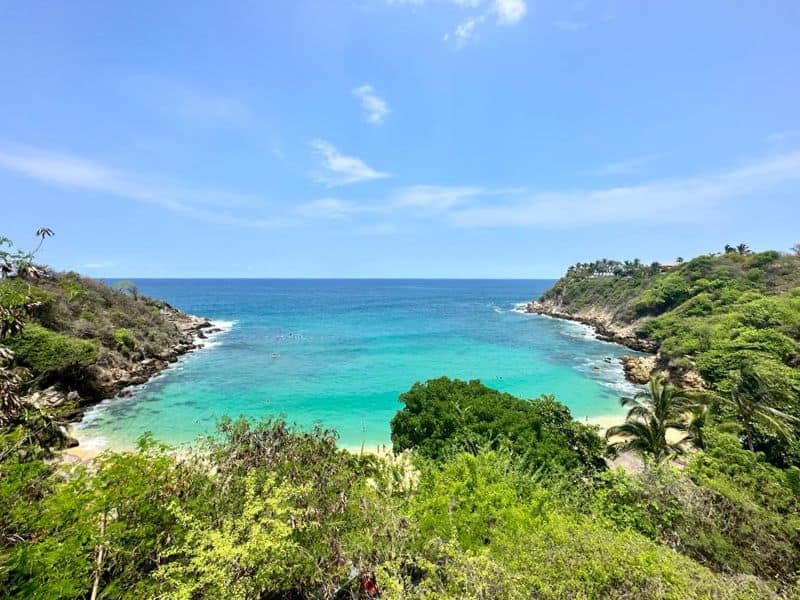
🏝️ Playa Carrizalillo, Puerto Escondido
🏝️ Playa Zicatela, Puerto Escondido
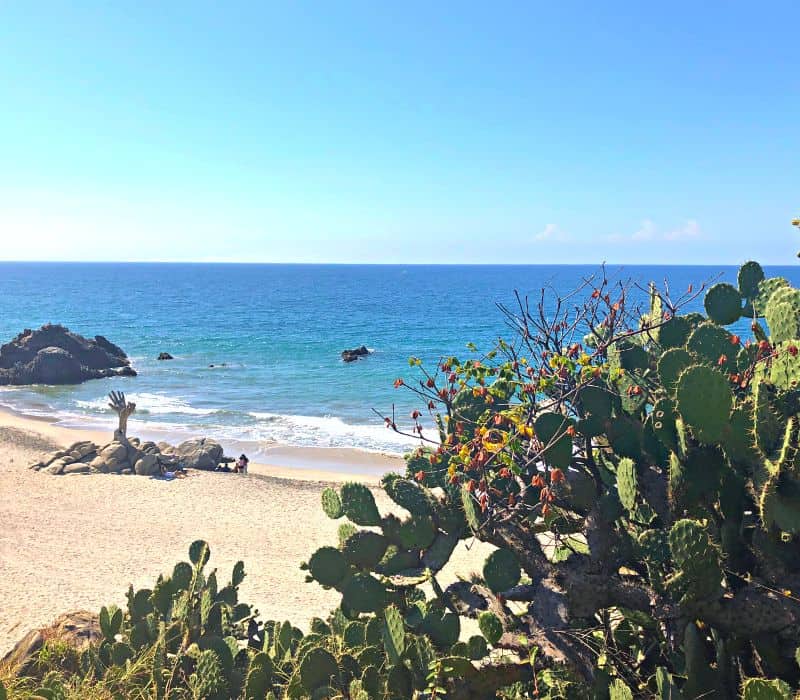
One of the main beaches in Puerto Escondido, and home to the Mexican Pipeline wave, as well as lots of surfers.
The water here isn’t always safe for swimming, but the beach is nice and there are a lot of restaurants, bars with live music, and shops on Playa Zicatela.
🏝️ Playa La Entrega, Huatulco
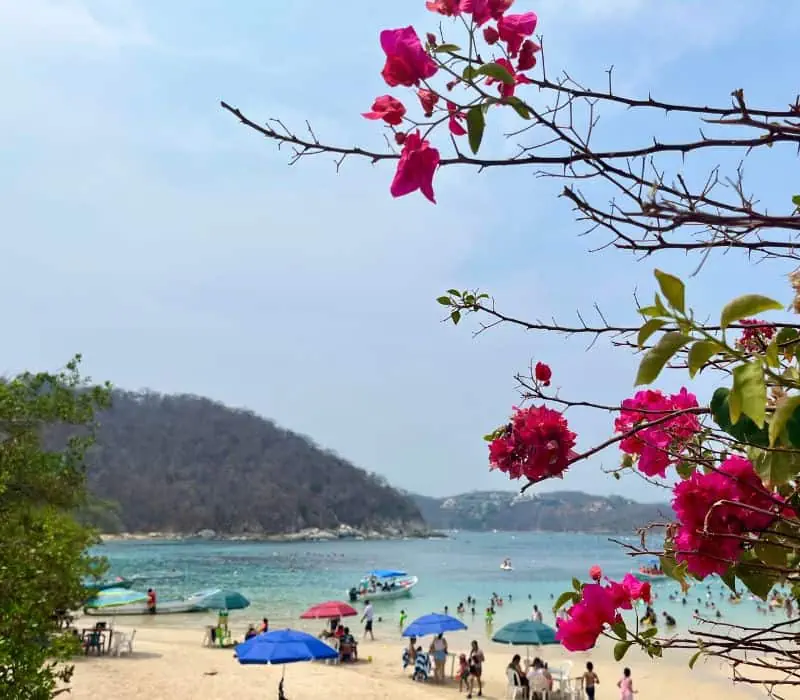
Playa la Entrega is one of the most popular and most accessible snorkeling beaches in Huatulco. If you’re planning to take any Huatulco tours to the beaches, you’ll no doubt stop here.
Located in Bahía Santa Cruz Bay, the water at Playa la Entrega Beach is shallow and filled with coral, making it an easily accessible snorkel location for tourists and families.
🏝️ Playa Mermejita, Mazunte
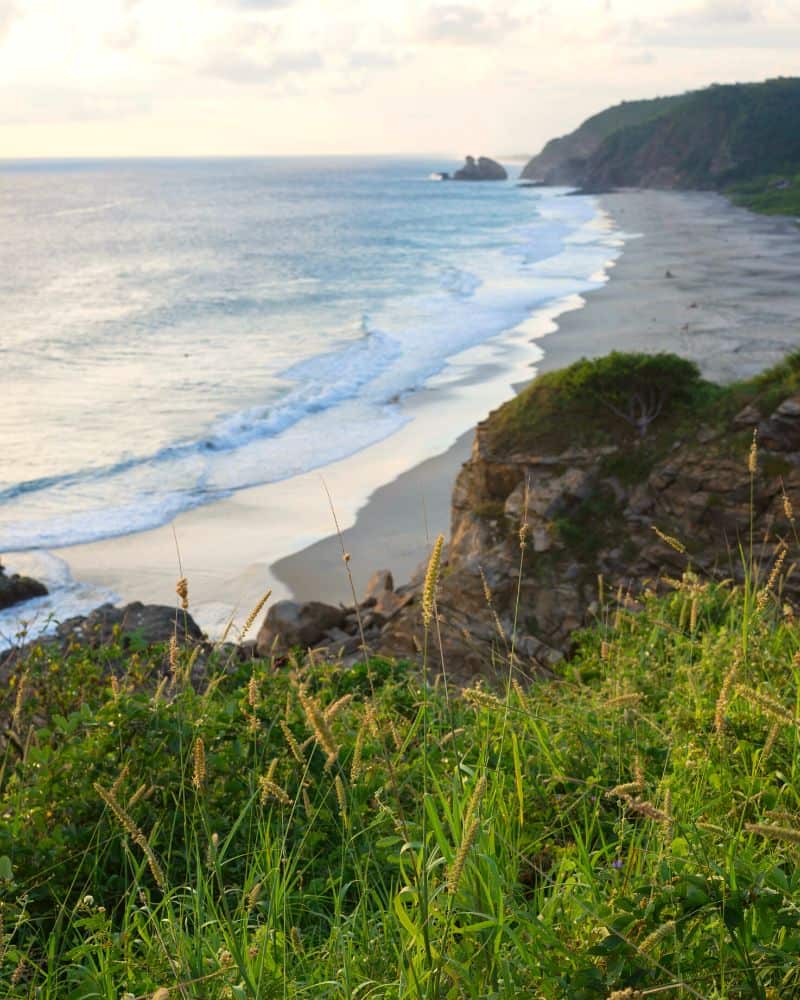
The best beach in Mazunte is Playa Mermejita, a must see Mazunte beach. There isn’t anything to do here but enjoy the beauty all around you, and take in the sounds of the Pacific Ocean.
🌅 Watch the sunset at punta cometa
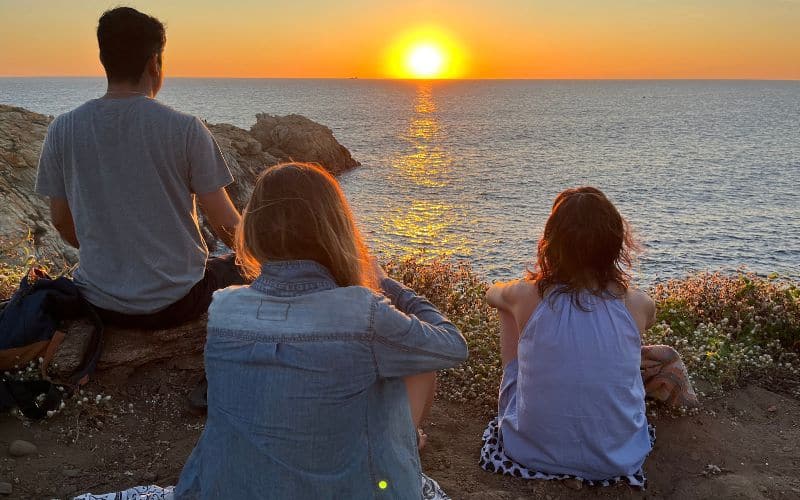
Punta Cometa is just a short and easy hike up from Playa Cometa and Playa Rinconcito.
You can walk up there all day, but it’s an especially popular area at sunset because you’ll get some amazing views from the clifftop. Just below Punta Cometa, you have a 180° ocean view of Playa Mermejita and the Pacific Coast.
🏝️ Playa Chacahua, Lagunas de Chacahua National Park
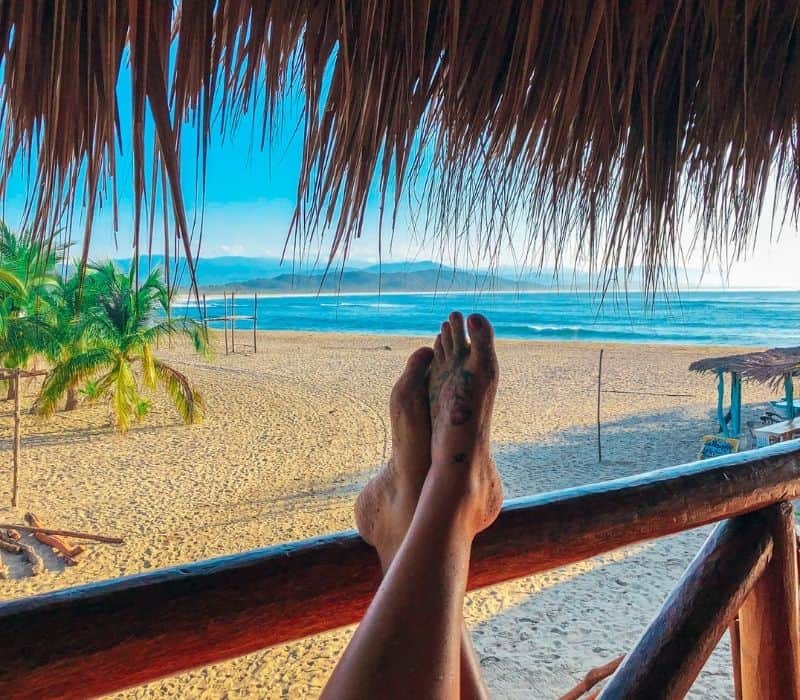
One of the most off the beaten path places to visit in Oaxaca is Lagunas de Chacahua National Park, usually just called Chacahua (pronounced cha-caw-wah).
This Mexico national park in Oaxaca has gained in popularity in recent years, thanks to social media and YouTube.
Chacahua is one of those Oaxaca Mexico beaches to think, admire nature, surf and take Oaxaca surf lessons, lay in a hammock, read a book, go for a swim, watch the sunset and eat fresh seafood.
This island sits on the Pacific Ocean, and is popular with surfers and backpackers. The waves are medium-sized, but there are locals that offer lessons for beginner surfers, as well as board rentals.
🏝️ Want to visit Chacahua Oaxaca Mexico? Check out these Chacahua blogs to help plan your trip:
What is Oaxaca Known for?
5. Oaxacan Mezcal

Oaxacan mezcal is a distilled spirit that can be made from more than 30 varieties of the maguey (agave) plant. If mezcal sounds like tequila to you — it kind of is.
Much like how champagne is essentially a sparkling wine from the city of Champagne, France, tequila is a kind of mezcal from the city of Tequila, Mexico. If Tequila, Mexico, is the home of tequila, Oaxaca is the home of mezcal.
To show how much Oaxacans love their mezcal, there’s this common saying:
Para todo mal, mezcal. Para todo bien, también. (This means, “For everything good, mezcal. For everything bad, mezcal as well.”)
In Oaxaca, mezcal comes served in a copita (mezcal cup), often with a plate of orange slices and sal de maguey (maguey worm salt). This is the same worm that’s in a tequila bottle; though never a mezcal bottle.
Note: This beloved drink is meant to be sipped not taken as a shot. When you visit all the best Oaxaca mezcal bars, remember to sip!
In terms of flavor, mezcal tends to be a bit smokier than tequila, as it’s smoked underground in the fermentation process. However, not all mezcal has a smoky flavor.
The best mezcals come from Oaxaca, Mexico — like Ilegal Mezcal, Montelobos and 400 Conejos, Mexico’s best selling mezcal.
🥃 Best Oaxaca Mezcal Tours
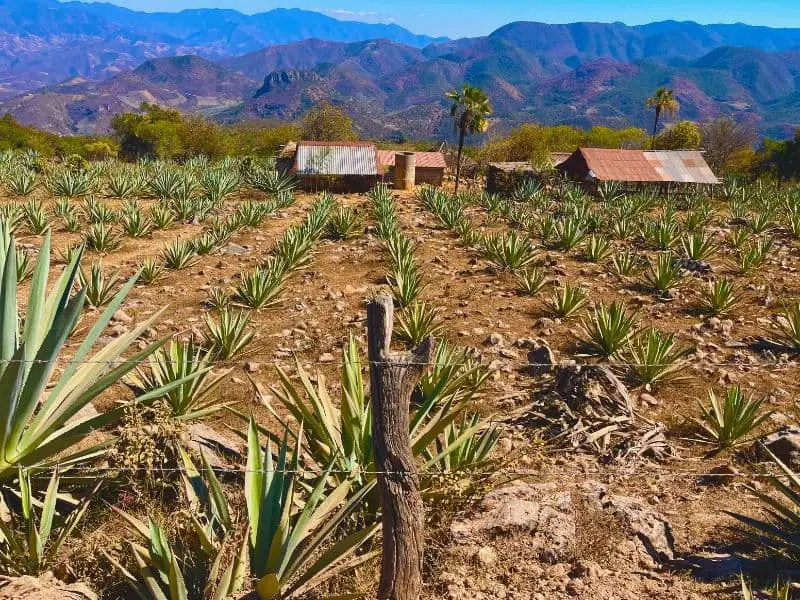
One of the best things to do in Oaxaca Mexico is take a Oaxaca mezcal tour at a distillery to see the entire mezcal process.
It starts with harvesting the agave, then smoking it underground, then distilling it, and finally, tasting the final product. After you taste some, you’ll be able to buy your favorite one(s).
What is Oaxaca Known for?
6. Ruins in Oaxaca
There are a several ruins in Oaxaca — Monte Alban, Mitla, Zaachila, Yagul, Dainzú, Guiengola, San José el Mogote, Huamelulpan, Casa de la Cacica, Lambityeco, Yucuita and Copalita Ruins in Huatulco.
Most people traveling to Oaxaca don’t see them all — and in truth some of the sites aren’t much to see, like San José el Mogote near San Agustin Etla. However, some will really wow you, like these two:
🕌 MONTE ALBAN Ruins
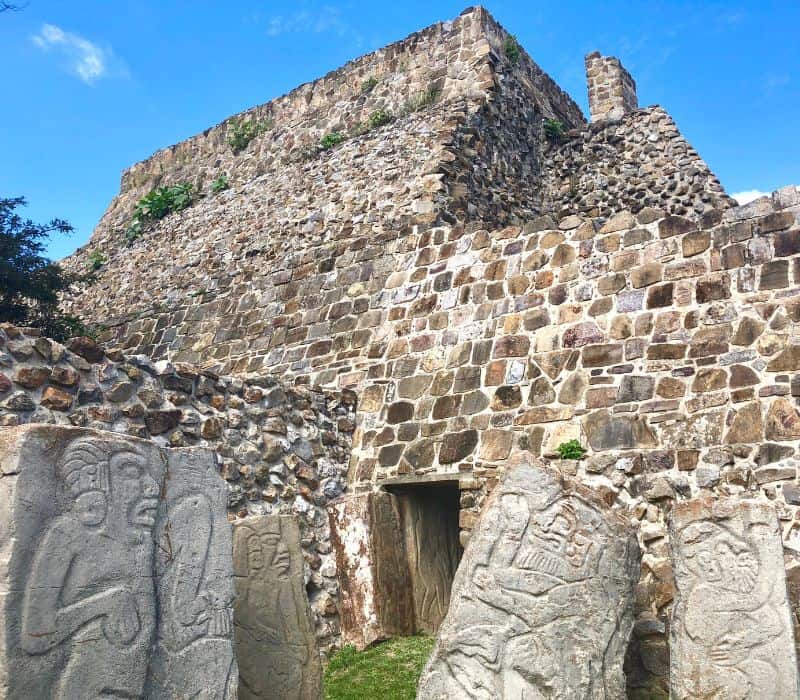
Monte Albán archaeological site is the most famous of all Oaxaca ruins. This unique mountaintop archaeological site was once home to Olmecs, Zapotecs, and Mixtecs, and other indigenous groups.
The knowledge, artistry, and traditions of these bygone peoples are on prime display at Monte Alban — one of the oldest cities in Mesoamerica. No wonder it’s one of the Mexico UNESCO World Heritage Sites.
You can explore Monte Alban with an expert guide to see the canals, terraces, and pyramids, and learn about the hieroglyphs that provide significant insight into Zapotec culture, or visit on your own.
History buffs will love Monte Alban, especially its architecture that dates back to the 15th century and 16th century. Given Central Oaxaca’s temperate weather, you can visit year round.
🕌 Mitla Ruins & Archaeological Site

The main attraction in the Oaxaca pueblo magico of San Pablo Villa de Mitla are the ruins of Mitla. The city of Mitla Oaxaca is home to two pre-hispanic archaeological complexes, as well as caves and rock shelters.
Some of these shelters even have rock art and archaeological evidence demonstrating the evolution of humans in the region, going from hunter-gatherers to farmers.
Mitla is known as the Place of the Dead in the Nahuatl language. The Zapotec indigenous people believed that Milta served as a getaway between the word of the dead and the living.
It was a religious center run almost exclusively by priests who spent their time performing rites, burning incense, and making sacrifices to the gods.
The ruins, located just outside the city of Oaxaca, are one of the most preserved archeological sites in the Valley of Oaxaca. They are thought to be more than 10,000 years old.
What is Oaxaca Known for?
7. Oaxaca Pueblos Magicos
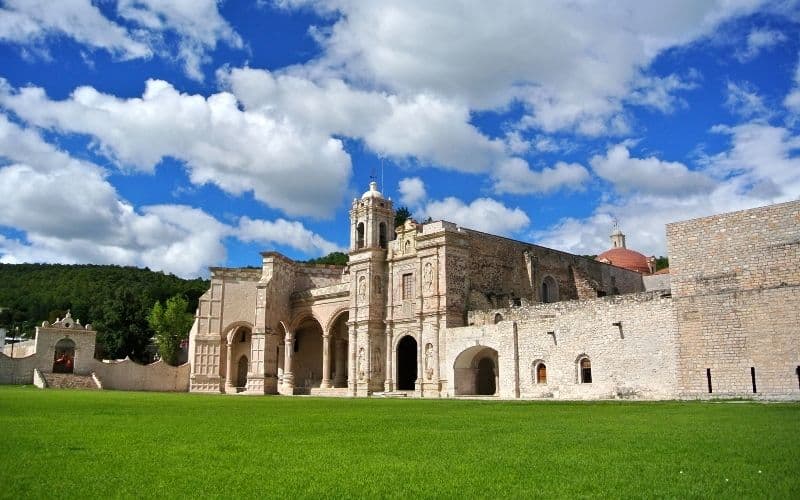
There are six Oaxaca pueblos mágicos — Mazunte, San Pablo Villa de Mitla, Capulálpam de Méndez, Saint Peter y Saint Paul Teposcolula, Huautla de Jimenez and Santa Catarina Juquila.
However, you might be wondering, What is a pueblo magico?, so let’s clear that up before we continue.
The phrase Mexico pueblos magicos translates to magic towns. They are small towns with unique sites, features and traditions that Mexico visitors will want to check out.
Want to know, How many pueblos magicos are there in Mexico?
There are about 135, though the list can change and that number can fluctuate. 🇲🇽 For the complete list of Mexico pueblos magicos, head here. Below, you’ll find info on the two most-visited Oaxaca pueblo magico towns.
🏝️ Mazunte Pueblo Magico Oaxaca
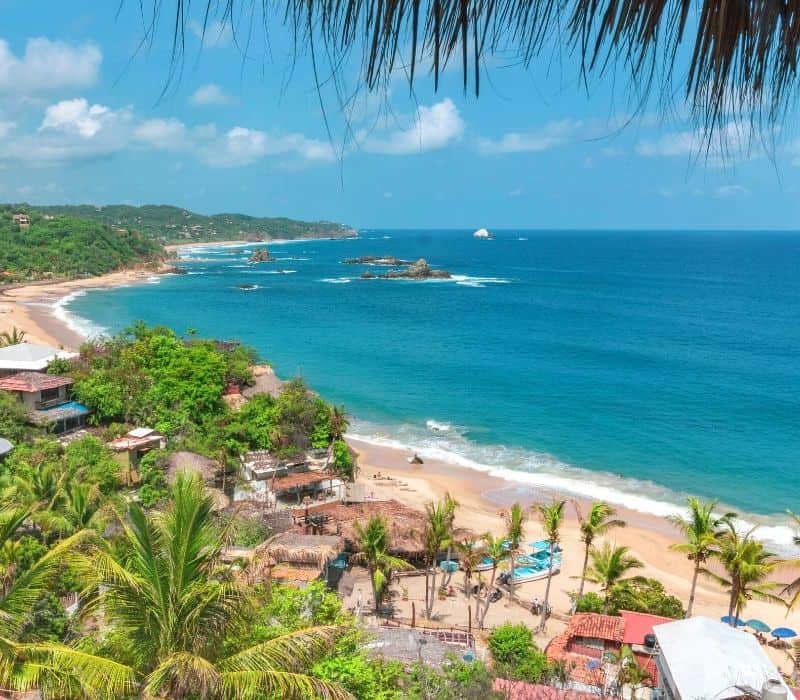
Mazunte is one of the 135 or so Mexico pueblos magicos (magic towns). There are six Oaxaca pueblos magicos, and Mazunte is the only pueblo magico on the coast of Oaxaca — making it ideal for beach lovers.
It is also a haven for spiritual seekers, bohemian travelers, artists and backpackers. Mazunte is considered one of the metaphysical hubs in Mexico, much like Sayulita and Tepoztlan, two other pueblos magicos in Mexico.
Mazunte is located on the coast of Oaxaca, and sits right on the Pacific Ocean. It is between two of the best beach towns in Oaxaca, Puerto Escondido and Huatulco; both about one hour by rental car.
🌵 Mitla Pueblo Magico Oaxaca
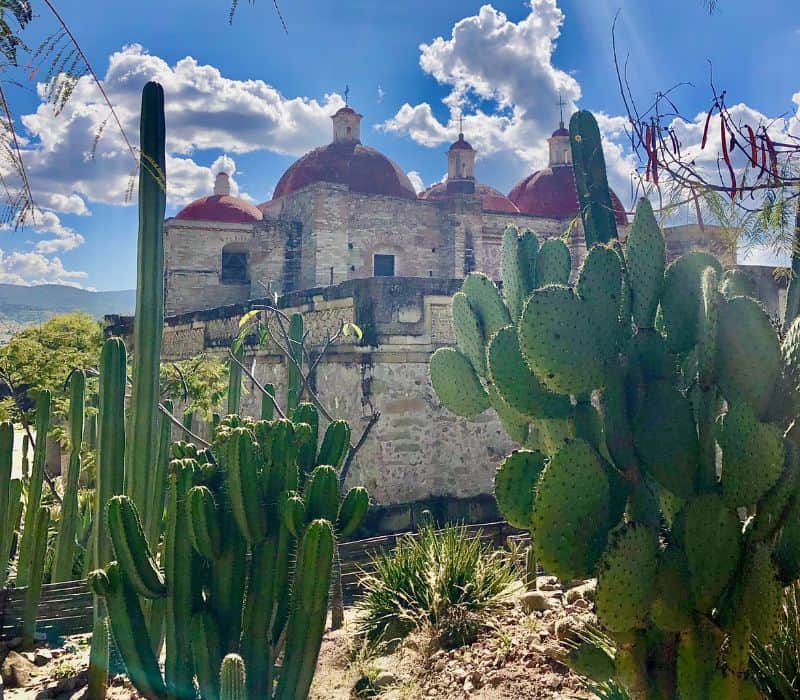
San Pablo Villa de Mitla, usually just called Mitla, is one of the most popular Oaxaca pueblos mágicos thanks to the archeological ruins of Mitla. They were a spiritual center for both the Mixtec and Zapotec cultures.
Some of the more interesting facts about Mitla are that it was once a holy burial site for the Zapotec community’s nobles, and that it’s thought to be more than 10,000-years-old!
In 2010, the Mitla archeological zone was designated as one of the UNESCO World Heritage Sites in Mexico.
The town of Mitla is also known for its culture, history, unique architecture, and artisan embroidery. It is also famous as a Oaxaca mezcal town, with plenty of local producers making “the drink of the gods.”
Mitla is located about 28 miles (45 km) from Oaxaca City. It is part of the Tlacolula District, just east of Valles Centrales, or Central Valleys Region.
What is Oaxaca Known for?
8. Hierve el Agua Waterfall
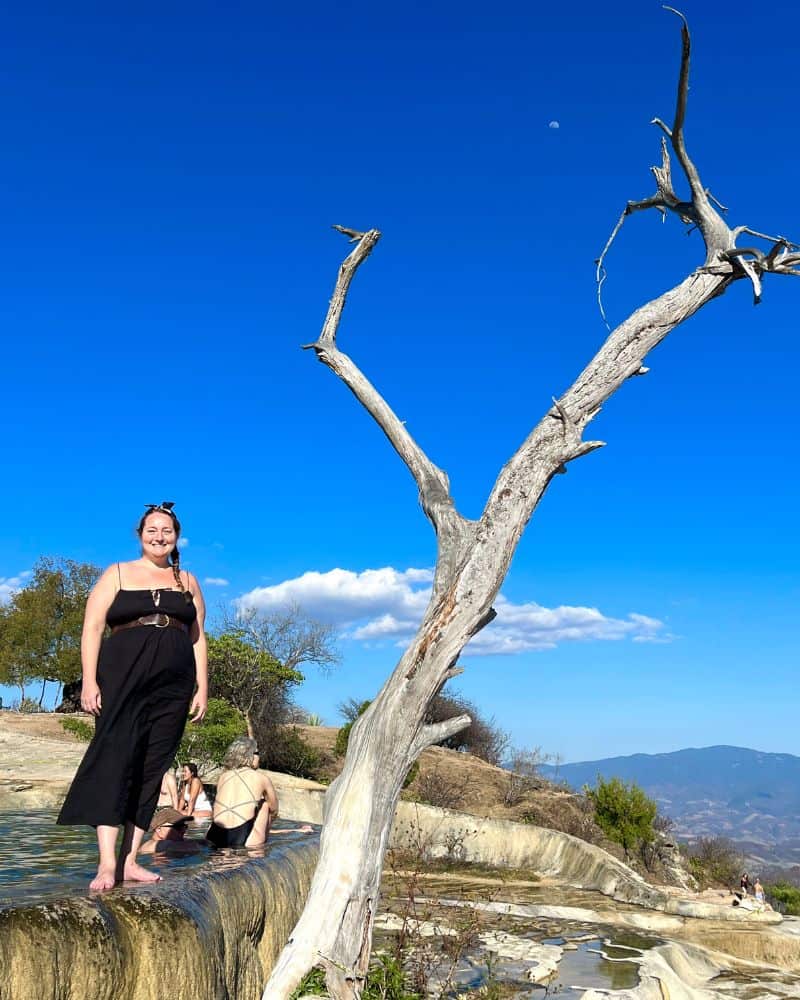
Right off the bat, you probably want to know What is Hierve el Agua? Hierve el Agua is a series of thermal pools and calcified waterfalls (or petrified waterfalls) located in San Lorenzo Albarradas pueblo in Oaxaca state.
Hierve el Agua is one of the only petrified waterfalls in the world, so it’s a very special place. It is about 1.5 hours by car from Oaxaca City, and one of the most recognizable natural landmarks in Mexico.
You can visit on Hierve el Agua tours, like Ultimate Hierve el Agua Hike, or go on your own. There are the Hierve el Agua natural hot springs to swim in, and Hierve el Agua hikes — but for these, you do want a guide.
🤔 What is a Petrified Waterfall?
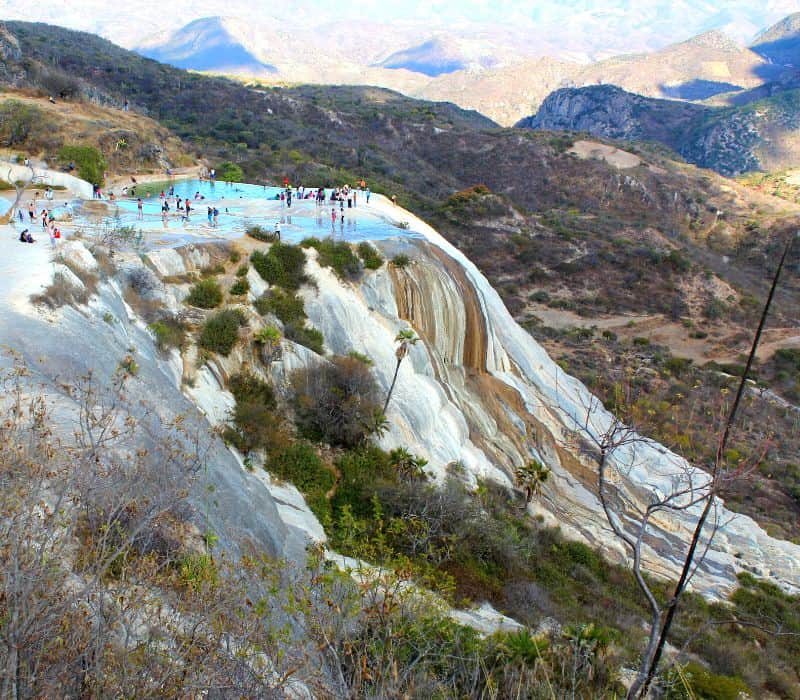
While it does look like there are waterfalls at Hierve el Agua, it’s an optical illusion. There’s actually no water falling, but it does look like there is.
The waterfalls of Hierve el Agua are the result of small streams and droplets of mineral-rich water falling over the side of a cliff. After many years, the water and minerals petrified in a stream-like formation.
Centuries later, it now looks like a waterfall cascading over the cliff face. There are two such waterfalls at Hierve el Agua — the Cascada Chica (small waterfall) and Cascada Grande (large waterfall).
What is Oaxaca Known for?
9. Oaxacan Art

Visitors will discover the most incredible Mexican folk art in Oaxaca — from black pottery and fantastical animal sculptures called alebrijes, to artisan cheese, Oaxaca mezcal and the famous Oaxacan rugs (tapetes).
You can find locally-made handicrafts in most Oaxaca markets, but art lovers will really enjoy taking a tour of the Oaxaca Ruta de Artesanías (Oaxaca Art Town Route).
Each of these Mexican art towns is like a unique art gallery, and they only make one craft in each town. Here are three must-visit Oaxaca art towns for those who want to experience the art of ancient indigenous cultures first-hand:
🖤 San Bartolo Coyotepec, Oaxaca Black Pottery Town

There are few better places to enjoy Oaxacan art than the small town of San Bartolo Coyotepec (pronounced coy-yo-tah-peck).
Known internationally for its black pottery, the ceramics made here have been found in archaeological digs going back centuries. Why? — you might be asking.
Because “barro negro” (black clay) is extremely strong and impermeable. Known as Oaxacan black pottery, barro negro is the perfect material to make containers for storage or transport.
Until the 1950’s, though, you may have thought black clay was a misnomer. That’s because the fired wares came out of a gray matte color; not black at all.
Fortunately, Doña Rosa Real Mateo, a San Bartolo native, discovered that if she rubbed a stone over the surface, the vessels fired to a deep shiny black.
This technique, called burnishing, makes the clay more fragile and porous, but adds beauty by spades. Decorative black pottery makes for stunning home decor and is all the rage in San Bartolo now, supporting 95% of the population.
Doña Rosa’s family continues to make fine black pottery today, as do other notable artists like Carlomagno Pedro and Abdiel Cardozo Calderón. San Bartolo Coyotepec is one Oaxaca artisan town you won’t want to miss.
🐉 San Martín Tilcajete, Oaxaca Alebrije Town
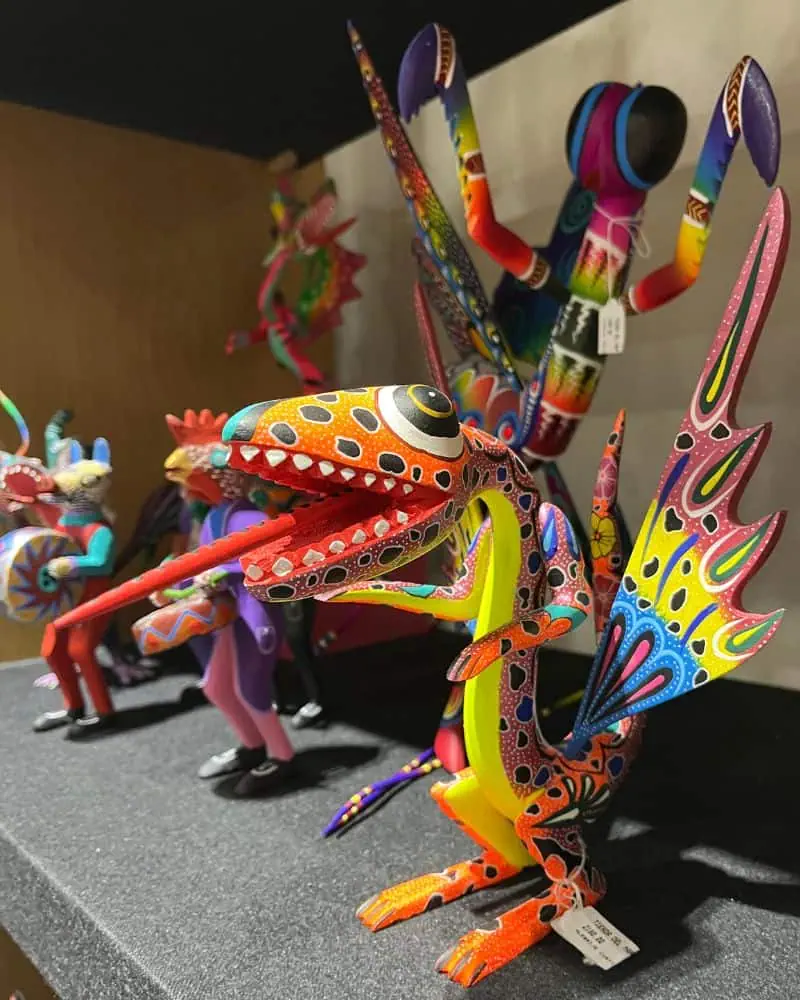
Colorful and fanciful — that’s one way to describe the bright wooden sculptures San Martín Tilcajete, Mexico has. The town has become famous for its colorful animal figures, known as alebrijes.
The creatures are expertly sculpted in copal, a wood said to hold magical properties. Next, they’re air-dried for six months to two years. Alebrijes can be a couple of inches to several feet tall.
During the drying, some of the pieces may crack. If they do, they are repaired using wooden wedges, pine paste, and resin then sanded until perfectly smooth.
Next, the painting begins. An expert painter will lay down a base layer, often with another color, to add highlights and shadow.
Then, the detailed work begins, requiring a steady hand, stamina, and a lot of patience from these Oaxacan painters. The results are stunning fantastical creations for sale in shops and homes throughout the city.
Although the Oaxaca artists of San Martin Tilcajete carved wood for generations, they didn’t start making alebrijes until the 1990s.
Original alebrijes were made in papier mâché by Pedro Linares in Mexico City. However, Oaxaca artisans adapted them to their preferred form using local materials that were easy to come by, like copal wood.
Manuel Jiménez Ramírez, one of the most famous people from Oaxaca, is said to have been among the first people to make alebrijes from Oaxaca Mexico. He is often called the “father of Oaxacan alebrijes.”
🧵 Teotitlán del Valle, Oaxaca Rug Town
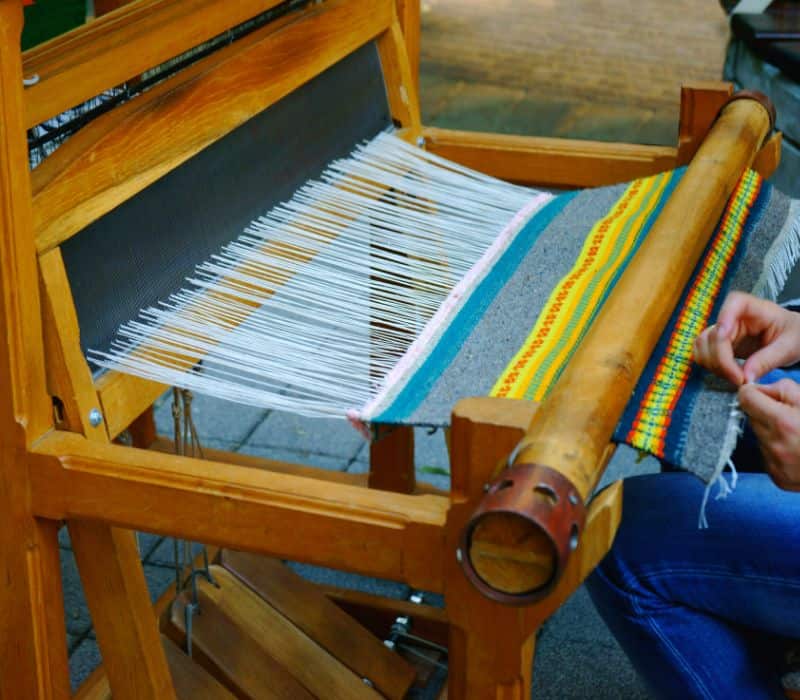
Art runs deep in the soils and towns of Oaxaca, and in this case, in fibers and fingers. Teotitlán del Valle, AKA the Oaxaca Textile Village, is a Zapotec village founded in about 1465.
Teotitlán del Valle is famous for its massive and intricate “tapete” rugs. These Oaxaca rugs are made from local sheep wool, which has been dyed in a gorgeous array of reds, blues, yellows, and purples.
Although synthetic dyes are still used by some, the most dedicated artists use all-natural dyes gathered from wildflowers, bark, roots, and cochineal insects.
What is Oaxaca Mexico Known for?
10. Colorful Oaxaca Markets

Oaxaca is known for many things. It’s one of the most ethnically-diverse states in Mexico, home to some of the best food and mezcal in the country, with stunning natural landscapes and beaches — and the colorful Oaxaca markets.
The mercados in Oaxaca City are ideal for souvenir shopping, but also a place to get an affordable meal and hang out where the locals go. In short, exploring the local markets is a must on your Oaxaca itinerary.
Here are three of the best Oaxaca markets that you won’t want to miss when traveling to Oaxaca Mexico:
🛍️ Mercado Benito Juarez Market

One of the best things to do in Oaxaca City is stroll the city’s mercados. Of the most-visited, there’s Benito Juarez Market Oaxaca, perfect for shopping and sampling traditional Oaxacan foods and drinks, like aguas casilda.
If you’re looking for a place to buy inexpensive Oaxaca souvenirs, this is it.
Here, you’ll find traditional Oaxacan garments, huarache shoes, floral headbands, artesanias (artisan handicrafts), colorful embroidered purses, leather goods, and much more.
🛍️ Mercado 20 de Noviembre Market
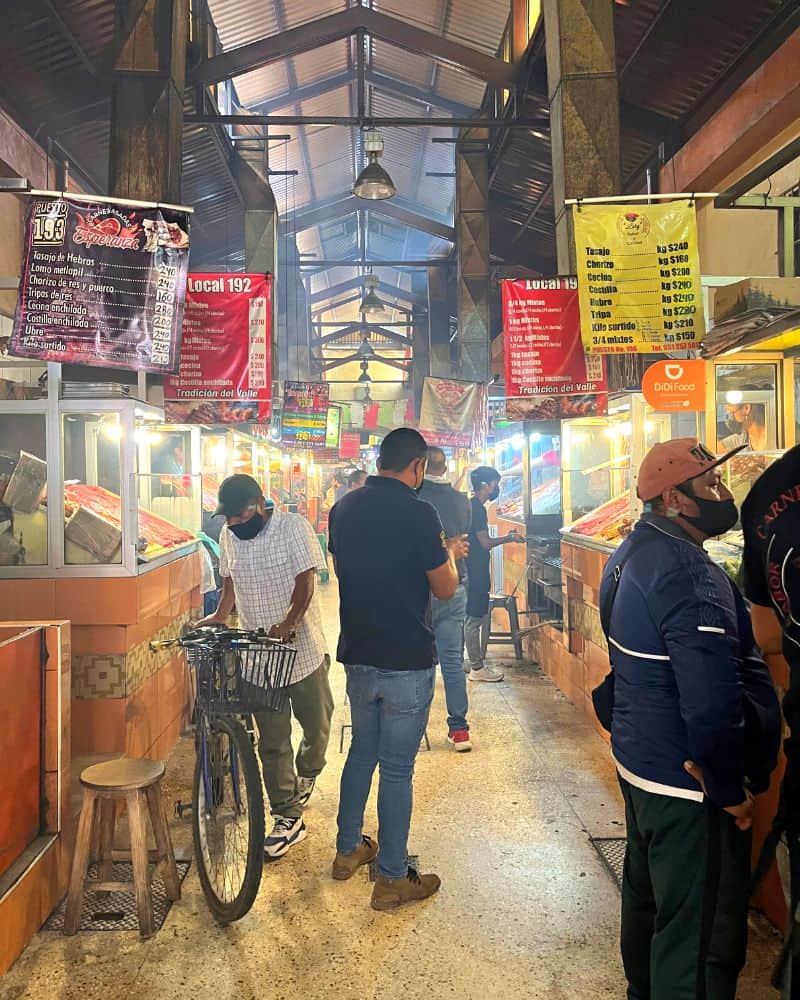
🔥 Oaxaca Pasillo de Humo in 20 de Noviembre Market
Located inside the Mercado 20 de Noviembre Market, you’ll find Pasillo de Humo AKA Oaxaca Meat Hall. In English, pasillo de humo actually means smoke hall or smoke alley — and yes, this is a smokey part of the market.
Here, there are rows of vendors selling meats and veggies a la carte that you can buy and have cooked al carbon (over charcoal). The smoke imparts a delicious flavor, and the aroma in the air is intoxicating.
🛍️ Tlacolula Sunday Market in Oaxaca
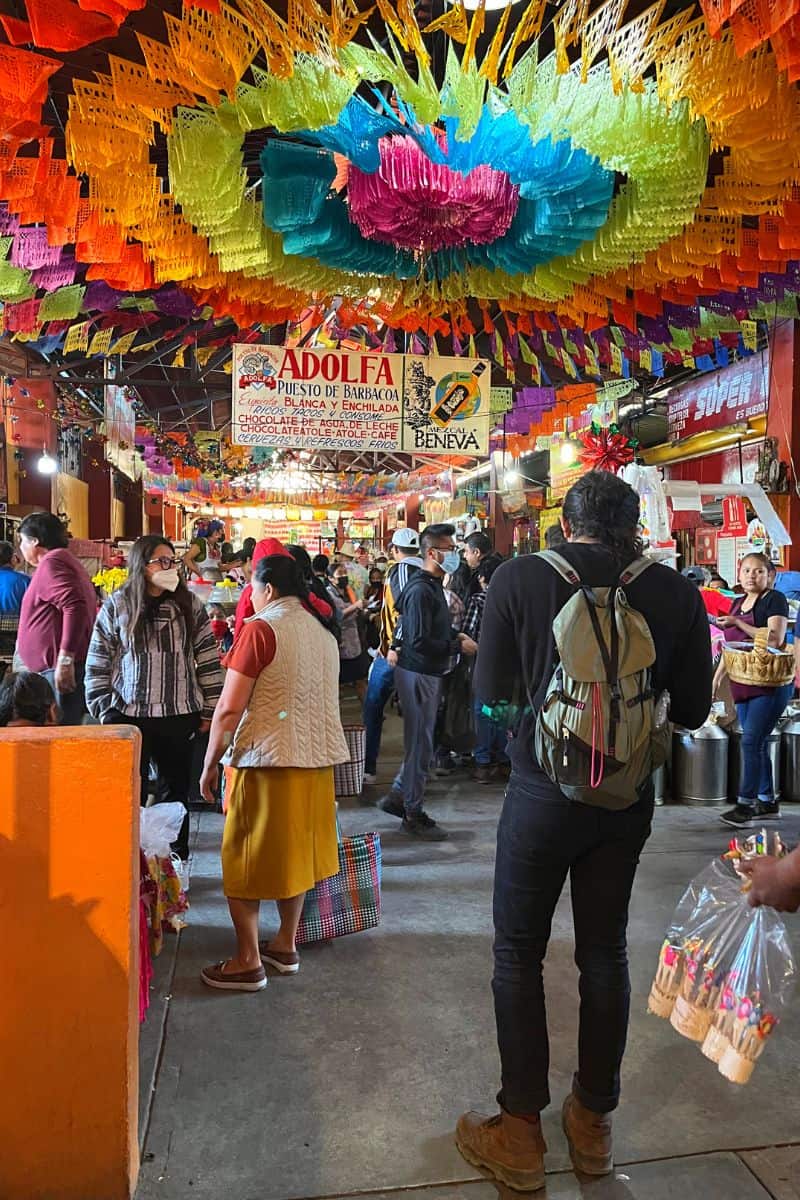
Here’s one of the more fun facts about Oaxaca Mexico: Tlacolula Market is the oldest continuously-run local market in Oaxaca — and it has been around for several centuries.
Nowadays, you can buy everything from fresh produce and prepared foods, to locally-made mezcal and handicrafts at the Tlacolula de Matamoros Market.
Every Sunday, thousands of vendors, tourists and locals head to the Tianguis de Domingo Tlacolula, AKA the famous Sunday Tlacolula Market.
It can be chaotic, but in the best way, as you’re enveloped in the colors and sounds of local Oaxaca life. If this seems intimidating, book this Old Tlacolula Market Tour with Adal, and let a local show you around.
Oaxaca Travel Guide and FAQ

How do you pronounce Oaxaca?
Wondering about the Oaxaca pronunciation? It’s a common question, so if you are, you’re not alone! The word Oaxaca is pronounced waa-haa-kah.
Where is Oaxaca located?
Oaxaca is a state in southern Mexico, surrounded by other Mexican states like Chiapas and Puebla.
🗺️ Oaxaca Map
The southern edge of the state sits on the Pacific Ocean. Oaxaca City is the state’s capital city, and located about six hours south of Mexico City, you can book direct flights.
What is the best time to visit Oaxaca Mexico?
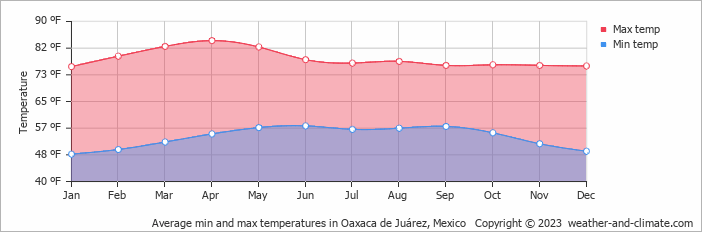
The best time to travel to Oaxaca is during the dry season, October to May. If you don’t mind some rain during the Oaxaca rainy season, you will also get lower prices — as this is the slow season.
🌡️ Oaxaca weather
If you want to avoid the crowds, the Oaxaca busy season runs from about late-October for Day of the Dead, through mid-January.
Many also visit Oaxaca de Juárez (Oaxaca City) for the Guelaguetza in July, the second biggest Oaxaca festival.
Oaxaca City has a desert climate, so hot days and cool nights. The temperature in Oaxaca City fluctuates a lot, so be mindful and bring layers when packing for Oaxaca.
If you hate the heat, avoid the hottest months of April to May so you have an enjoyable Oaxaca vacation.
Is Oaxaca safe for tourists?
For the vast majority of travelers, Oaxaca is safe to visit. In fact, Oaxaca is one of the safest states in Mexico. Oaxaca City is the country’s 67th largest city, with a population of about 275,000, but retains a humble, pueblo vibe.
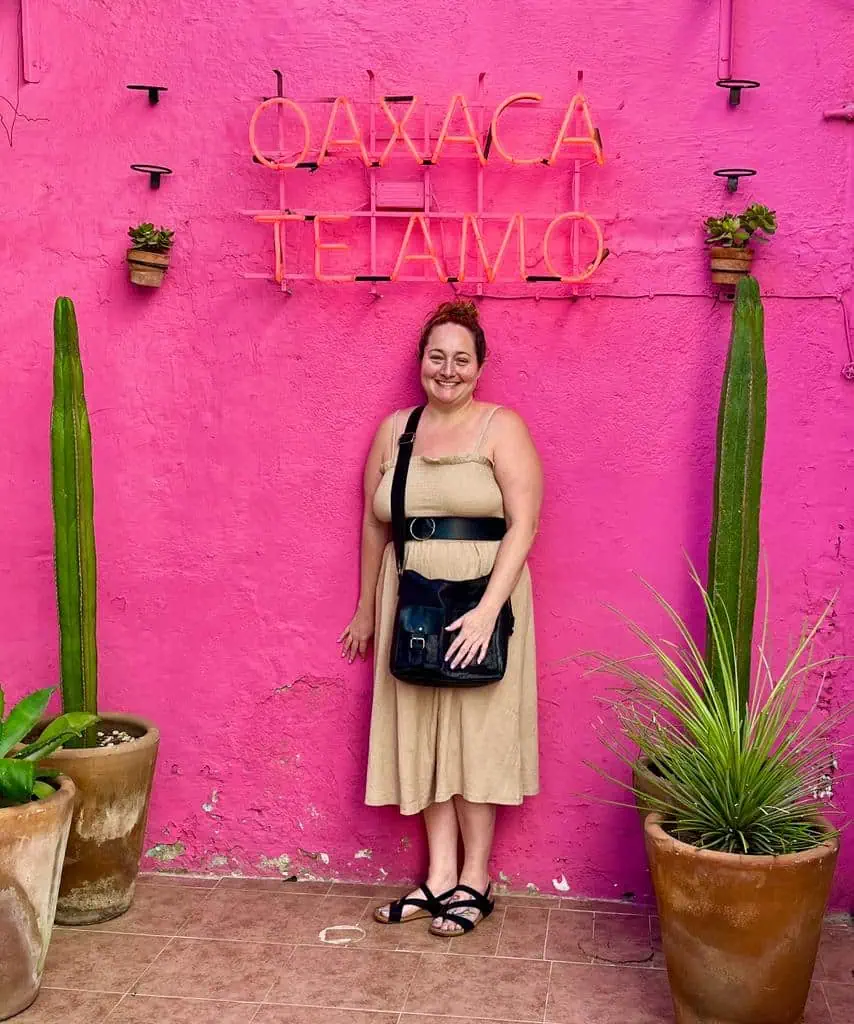
⚠️ For a deep dive into this topic and a Oaxaca safety guide, check out Is Oaxaca Safe to Travel to Right Now?
That’s not to say bad things don’t happen in Oaxaca City; they do.
However, if you take the same general travel precautions you would anywhere else — ie. stay aware of yourself, your belongings and your surroundings — you should be safe traveling to Oaxaca City.
IS OAXACA VERY TOURISTY?
It is touristy in Downtown Oaxaca City and the popular tourist sites like Monte Alban and Hierve el Agua. To avoid the high tourist season, the best time to visit Oaxaca is in January and February.
What’s the closest Oaxaca Airport?
Wondering, Is there an airport in Oaxaca City? Yes, there’s Oaxaca International Airport (code: OAX), located about 20-30 minutes from downtown. ▶︎ Book your Oaxaca flights now!

You might see this airport called Xoxocotlán International Airport, but it’s still OAX. Note: Make sure you don’t confuse the work Xoxocotlán for Xochimilco, which is one of the best Oaxaca neighborhoods near downtown.
🚐 Best Oaxaca Airport transportation
Is there Uber in Oaxaca City?
No — There is no Oaxaca Uber service, and no Lyft in Oaxaca either.
They do have DiDi Taxi through the DiDi Rider app, which lets you call a Oaxaca taxi via the app. It’s basically like using Uber or Lyft, but you will get a regular cab.

ARE TAXIS SAFE IN OAXACA MEXICO?
For the majority of travelers, yes, taxis are perfectly safe to use in Oaxaca.
I personally prefer to call taxis via the DiDi Rider app, so I have a record of my trip and the price is already set for me, but you can also just hail a cab on the street.
How do you get around Oaxaca City?
Oaxaca City is walkable, so if you’re just staying in the city itself, you can walk and use taxis and public transportation as needed.

If you’re doing Oaxaca day trips, a rental car or group tour is your best bet, and I recommend booking Oaxaca tours via Viator and Airbnb Experiences.
How many days do you need in Oaxaca City?
Within Oaxaca City itself, you can see the highlights in 2-3 full days. However, many visitors could realistically spend a week in Oaxaca City — especially art, food and culture lovers.
The best things to do near Oaxaca include exploring Hierve el Agua in San Lorenzo Albarradas, San Agustín Etla, Teotitlán Del Valle and San Pablo Villa de Mitla, a pueblo magico (magic town).
Is Oaxaca City worth visiting?
Yes — Oaxaca is magical; it’s the Mexico people imagine Mexico to be.
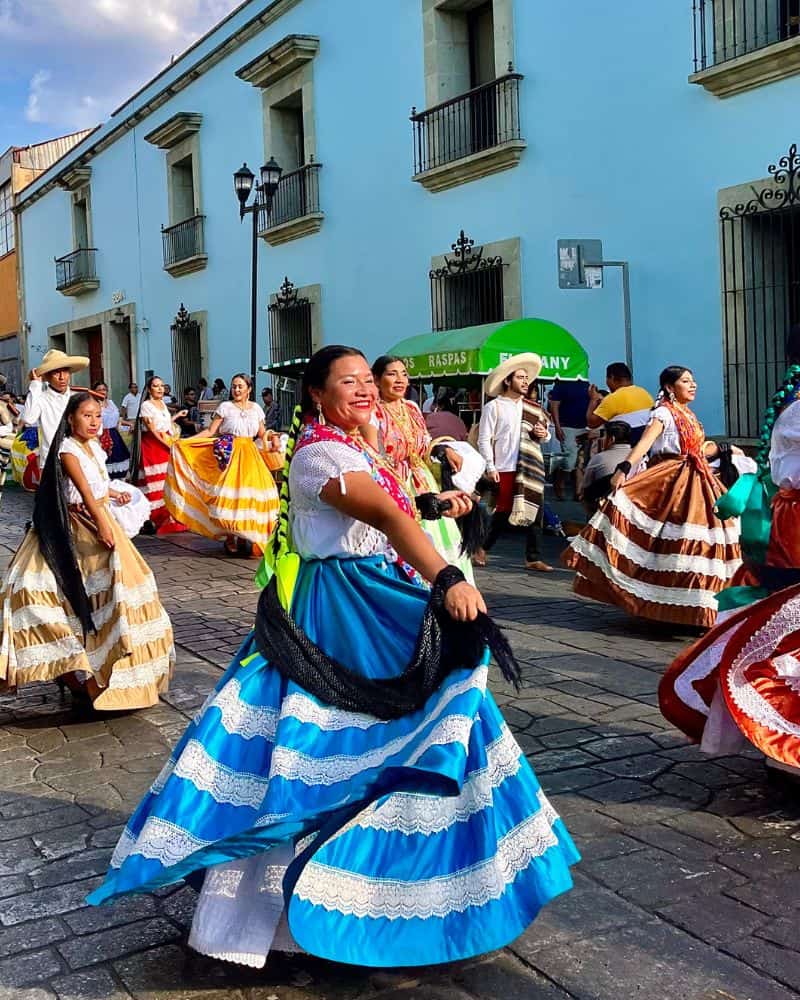
There’s everything from rich history, colorful festivals, UNESCO World Heritage Sites, locally-made Oaxacan mezcal, beautiful nature, colonial towns, indigenous artisan communities, and yummy Oaxacan food.
As you’ll usually need to take at least two flights to Oaxaca, Mexico, or even a flight and a bus, you might still be wondering if traveling to Oaxaca is worth it.
I hope this guide to Oaxaca made it clear that FU+K YES IT IS!
Final Thoughts: What is Oaxaca Known for?
Why is Oaxaca so popular? What makes Oaxaca unique? If you started this article not sure what you needed to know about Oaxaca Mexico, I hope you have a much greater understanding of this unique Mexican state.
To sum it up: Oaxaca is food, festivals and fun!
Ready to plan your trip to Oaxaca? Then you’re going to need a place to stay. Here are some guides to help you pick a hotel in Oaxaca City: